
Disguised Alpha   /   Compound references. Original research.
SLU-PP-332Research reference

Small molecule / Pan-ERR research

SLU-PP-332Inside metabolic signaling.

SLU-PP-332 is an experimental small molecule used to investigate estrogen-related receptors, or ERRs. Published studies explore muscle metabolism, energy expenditure, and changes in aging tissues. The work summarized here is preclinical. Terms such as “exercise mimetic” describe selected experimental responses; they do not establish that a compound reproduces the many effects of exercise or delivers a proven benefit in people.

Preclinical research

A focused reference from the Disguised Alpha research network.

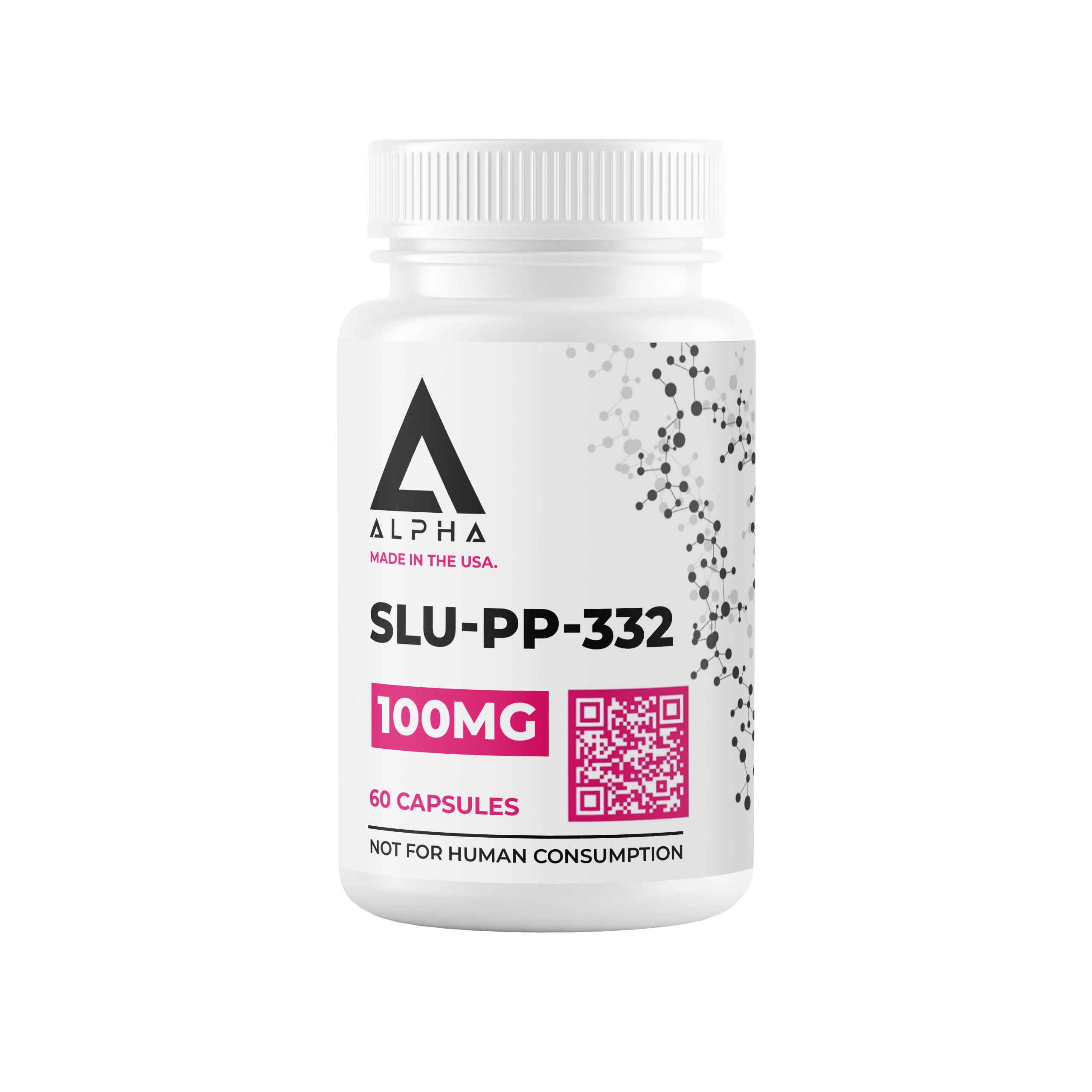
Disguised Alpha SLU-PP-332 product reference image
SLU-PP-332Catalog imagery · RUO
Molecular formula
C₁₈H₁₄N₂O₂
Molecular weight
290.3 g/mol
PubChem CID
5338394

Disguised Alpha catalog

Find the matching product.

Open the exact product listing for its format and documentation. Published studies do not validate a supplier’s finished product.

01 / The science

Understand the research focus.

A clear starting point for the mechanisms, experimental models and questions behind the compound.

01

ERR activation

SLU-PP-332 activates ERRα, ERRβ, and ERRγ in experimental assays, with greater potency at ERRα in the original report. These nuclear receptors regulate gene programs associated with cellular energy metabolism. Mechanistic evidence helps identify a research target; it does not provide clinical validation.

Read the primary source ↗
02

Fuel use and energy expenditure

Mouse studies examined whether ERR activation changes the balance between carbohydrate and fat utilization. Researchers measured respiratory exchange, resting energy expenditure, adiposity, and glucose-related outcomes. Such endpoints should be read together: an improvement in one laboratory measure does not establish improvement in every metabolic outcome.

Read the primary source ↗
03

Mitochondria and aging tissues

An aging-kidney study investigated links among ERR signaling, mitochondrial function, and inflammatory pathways. Treated mice showed changes in several kidney-related markers. Human tissue observations in the same paper concern receptor expression; they are distinct from testing SLU-PP-332 as a treatment in people.

Read the primary source ↗

02 / Read with context

Know what the evidence can tell you.

The selected evidence comes from laboratory and animal studies. It does not establish human efficacy, an appropriate human-use protocol, or the safety and performance of a commercial formulation. SLU-PP-332 and SLU-PP-915 are distinct molecules and should not be treated as interchangeable.

Start with three questions.
01What was tested?
Check the exact molecule, sequence, composition and formulation.
02Where was it tested?
Cells, animals and clinical populations answer different questions.
03What was measured?
A pathway signal is different from a demonstrated clinical outcome.

03 / Selected publications

Go straight to the source.

Original records, study models and the limits that matter when interpreting a result.

STUDY 01 · 2023
Skeletal-muscle cell line and mice

Synthetic ERRα/β/γ Agonist Induces an ERRα-Dependent Acute Aerobic Exercise Response and Enhances Exercise Capacity

The researchers reported changes in cellular respiration, oxidative muscle fibers, exercise-associated gene expression, and mouse treadmill endurance. Genetic experiments supported a role for ERRα in the endurance response.

Reading limit: These are cell and animal results. They do not establish human endurance improvement or show that exercise can be replaced.

↗
STUDY 02 · 2024
Lean mice and two mouse models of obesity

A Synthetic ERR Agonist Alleviates Metabolic Syndrome

The study reported shifts toward fat utilization and changes in energy expenditure and adiposity. In diet-induced obesity, glucose tolerance improved while the insulin-tolerance test did not show a change.

Reading limit: The response varied by endpoint and model. Mouse metabolic effects cannot establish a human weight-management outcome or validate a marketed formulation.

↗
STUDY 03 · 2023
Aged mice; supporting human and mouse tissue analyses

Estrogen-Related Receptor Agonism Reverses Mitochondrial Dysfunction and Inflammation in the Aging Kidney

Researchers treated 21-month-old mice for eight weeks and reported changes in albuminuria, mitochondrial measures, inflammatory markers, and kidney-cell preservation. The findings connect ERR activity with several aging-related pathways.

Reading limit: The intervention was studied in mice. Human tissue comparisons in the paper are not a human treatment trial.

↗

A focused selection, not a systematic review. Studies concern the tested material and do not validate a supplier’s finished product.

Explore research & source notes →

04 / Common questions

A little more clarity.

Quick answers for reading the science behind SLU-PP-332.

Is SLU-PP-332 a peptide?

No. Its chemical record describes a small molecule with a benzohydrazide-related structure. Being grouped with peptides in a catalog does not make it a peptide or establish shared properties.

What does “exercise mimetic” mean here?

It refers to similarities in selected experimental gene-expression and metabolic responses. That term is not evidence that the compound reproduces exercise’s full physiological effects, training adaptations, or clinical outcomes.

Do estrogen-related receptors mean estrogen replacement?

No. ERRs are a distinct receptor family. The aging-kidney paper explicitly distinguishes them from classical estrogen signaling, despite the similarity in their names.

Can results be carried over to every product format?

No. Route, vehicle, identity, purity, and exposure affect how an experimental result should be interpreted. The cited mouse studies do not establish that different commercial formats reproduce the studied exposure or response.

Continue your research

One compound. A wider research library.

Explore the complete SLU-PP-332 profile and related compounds in the Disguised Peptides research hub.

Open the full profile ↗